
FITS Life™
Education is about more than what happens during an academic lesson.
Students also need opportunities to understand themselves, communicate with others, manage emotions, build relationships, solve problems, make choices, care for themselves, and become increasingly independent.
That is the purpose of FITS Life™.
FITS Life brings together Social-Emotional Learning (SEL), social development, executive functioning, communication, self-advocacy, daily living skills, functional life skills, leisure, and independence throughout the student's school experience.
Social-Emotional Learning (SEL)
Understanding emotions is a skill. Managing frustration is a skill. Recognizing when you need help is a skill. Recovering when something does not go as planned is a skill. Navigating relationships is a skill.
At A-FITS, Social-Emotional Learning is woven throughout the school day because emotions and relationships do not occur according to a lesson schedule.
Students may work on identifying emotions, recognizing physical signs of stress, understanding triggers, using coping strategies, managing disappointment, developing flexibility, problem-solving, making responsible choices, understanding another person's perspective, repairing relationships after conflict, recognizing when support is needed, and advocating for themselves.
Real situations create real opportunities to learn.
Understanding Regulation
A student cannot always separate emotional regulation from Sensory Integration, communication, behavior, or executive functioning.
A student may appear angry when they are overwhelmed, shut down when they do not know how to express what they need, or avoid a task because it feels too difficult to organize.
Instead of looking only at what happened on the outside, A-FITS staff are encouraged to ask: “What is happening for this student, and what skill or support could help?”
Social Development
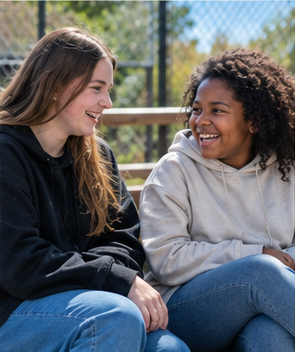
Friendships and relationships can have an enormous impact on quality of life.
Students may work on greetings, starting and maintaining conversations, asking questions, sharing interests, taking turns, joining activities, reading social cues, understanding personal space, working in groups, handling disagreements, compromising, recognizing another person's perspective, and developing friendships.
A-FITS does not want social development to exist only in a scripted social-skills lesson.
Students need opportunities to practice these skills with actual peers in actual situations.
Communication & Self-Advocacy
One of the most important life skills we can help a student develop is the ability to communicate: “This is what I need.”
Students may work on asking for help, expressing preferences, making choices, communicating discomfort, requesting support, saying no appropriately, explaining what helps them, recognizing when they need a break, expressing goals, and participating in decisions that affect them.
Greater independence begins with having a greater voice in your own life.
Executive Functioning
Knowing what to do and being able to independently organize yourself to do it are not always the same thing.
Executive-functioning skills may include organization, starting and finishing tasks, planning, time awareness, following schedules, remembering materials, prioritizing, shifting between activities, managing multiple steps, flexible thinking, problem-solving, and monitoring one's own work.
The support can gradually change as independence grows.
Daily Living Skills
Independence is built through everyday experiences.
Depending on the student's age, abilities, and goals, FITS Life may include personal hygiene, grooming, caring for belongings, cleaning, organizing personal space, making a bed, setting a table, food preparation, laundry, following household routines, managing personal items, completing chores, and asking for assistance when needed.
Our goal is to help each student become more capable, more confident, and less dependent where greater independence is possible.
Functional Reading & Math
Reading and math become especially meaningful when students understand how to use them in everyday life.
Functional reading can include schedules, calendars, directions, signs, menus, labels, community information, and workplace information.
Functional math may include telling time, understanding money, comparing prices, making purchases, receiving change, measuring, understanding quantities, basic budgeting, and applying mathematics during cooking or shopping.
A skill becomes more powerful when the student understands why it matters.
Making Choices
Choice-making is an important part of independence.
Students should have appropriate opportunities to make decisions throughout their day—what activity they prefer, which club interests them, what coping strategy works best, what task to complete first, what career interests them, or what they want help with.
Choice-making helps build communication, decision-making, self-awareness, responsibility, confidence, and self-advocacy.
Problem-Solving
Life rarely follows a perfect script.
Students need opportunities to recognize problems, identify choices, consider possible outcomes, choose a response, and ask for help when necessary.
Problem-solving is one of the skills that connects school success with adult independence.
Leisure & Recreation
Knowing how to use free time is a life skill too.
Students may need opportunities to discover art, games, music, sports, technology, building, reading, exercise, creative activities, hobbies, social recreation, and community activities.
Leisure skills can contribute to friendship, stress management, community participation, and quality of life.
Students deserve opportunities to discover what brings them joy.
Independence Is Not Doing Everything Alone
At A-FITS, independence does not mean a person must do everything without support.
True independence can also mean knowing what you can do, knowing what support you need, knowing how to ask for it, and participating meaningfully in decisions about your own life.
The better question is not “Can this student become completely independent?” It is: “How much greater independence can we help this student build?”
Skills Should Generalize Beyond School
A student demonstrating a life skill at school is only the beginning.
We want students to increasingly use communication, problem-solving, self-advocacy, daily-living, social, executive-functioning, and independence skills at home, in the community, with unfamiliar people, during new activities, in future workplaces, and throughout adult life.
Families are important partners in that process because they can help us understand where a student is already successful, where a skill is not yet carrying over, and which real-life priorities matter most outside the school building.
That is why FITS Life connects closely with FITS Integrated Support™, FITS Experience™, and FITS Beyond™.
Becoming More of Who They Are
The purpose of FITS Life is not to make students appear less different. It is not to teach students to hide who they are.
It is to give them more tools—more ways to communicate, understand themselves, navigate relationships, solve problems, participate, advocate, and live the life that is meaningful to them.
The School Needs to FIT Your Child.
Come experience A-FITS and talk with our team about your child's learning profile, strengths, support needs, and goals.
Schedule a Tour