
FITS Forward™
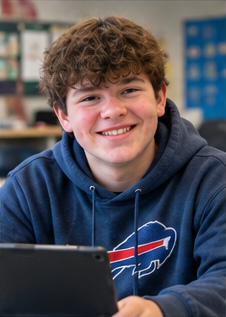
High school should prepare students for more than graduation.
At A-FITS, FITS Forward™ is our high-school transition framework designed to connect the FITS High School™ experience with adult life, greater independence, community participation, vocational development, self-advocacy, and whatever comes next after school.
The Bridge From High School to Adult Life
FITS High School™ is the student's high-school experience. FITS Forward™ is the transition framework that increasingly connects that experience with adulthood.
Students may continue working toward individualized academic goals while also building life skills, self-advocacy, executive functioning, vocational awareness, community participation, work-related behaviors, independent-living skills, and adult-transition priorities.
There is no single FITS Forward pathway because there is no single adult future for every student.
FITS Forward Supports Both Academic Pathways
Transition planning is relevant whether a student is participating in High Functioning Autism Programming, Functional Academic Programming, or a combination of both.
An academically capable student preparing for college, technical training, or competitive employment may need strong support with executive functioning, self-advocacy, organization, social communication, workplace expectations, or independent living.
A student in a functional academic pathway may place greater emphasis on practical academics, communication, community participation, daily living, supported employment, and adult services.
The academic pathway may differ. The responsibility to prepare the student for what comes next does not.
Life Skills Become More Important
As adulthood gets closer, practical independence becomes increasingly important.
Students may work on cooking, meal preparation, laundry, cleaning, personal hygiene, grooming, organization, managing belongings, following schedules, shopping, money use, time awareness, household routines, making choices, asking for help, and completing responsibilities.
The objective is to identify: What skills would give this student more independence in adulthood?
Self-Advocacy
The closer students get to adulthood, the more important it becomes for them to understand and communicate their own needs.
FITS Forward can help students develop greater awareness of their strengths, challenges, helpful supports, difficult environments, accommodations, how to ask for help, how to request a break, how to explain a sensory need, how to express a preference, and how to participate in decisions about their future.
A stronger voice can create greater control over one's own life.
Executive Functioning for Adult Life
Adulthood requires a tremendous amount of self-management.
Students may need help with planning, organization, starting and completing tasks, managing time, following schedules, prioritizing, remembering materials, shifting between activities, managing multiple steps, problem-solving, flexible thinking, and monitoring their own work.
The setting changes. The underlying skill remains important.
Career Exploration
Students should have opportunities to discover what types of work might interest them.
Career exploration may include learning about different occupations, workplace environments, job responsibilities, skills required for specific careers, student interests and strengths, and different ways of working.
The goal is not to decide a student's career immediately. It is to create enough exposure that the student can begin forming preferences.
Job Readiness
Job readiness begins before a student applies for a job.
Depending on age, readiness, interests, and goals, FITS Forward may include job-skills training, career-exploration activities, early work experiences, practical task practice, and opportunities to receive feedback and instruction in increasingly realistic work situations.
Students may practice following directions, completing multi-step tasks, staying engaged, working independently, maintaining accuracy, increasing endurance, organizing materials, working within time expectations, asking questions, accepting feedback, following workplace routines, and becoming less dependent on adult prompting.
Exposure helps students discover both what they can do and what kind of work environment may fit them best.
Workplace Skills Training
Employment success involves more than performing the job task itself.
Students may also need instruction and practice involving coworker relationships, communication with supervisors, workplace and personal safety, hygiene and attire, managing stress, handling feedback, problem-solving, appropriate breaks, customer or community interactions, punctuality, attendance, and professional boundaries.
These skills can be taught directly and then practiced across school, community, volunteer, and work-based experiences as appropriate.
Community-Based Instruction
FITS Forward should not exist entirely inside the school building.
Students may need opportunities to apply skills in shopping environments, restaurants, volunteer sites, community businesses, recreational settings, workplace environments, community events, and other public spaces.
It also helps us answer an important question: Can the student use the skill outside the place where it was taught?
Work Experiences
When appropriate, older students may participate in increasingly realistic work experiences.
Those experiences can help students understand workplace expectations, supervisor relationships, coworker interaction, attendance, punctuality, work pace, responsibility, task completion, asking for help, breaks, feedback, and workplace communication.
A work experience is valuable even if it helps a student discover that a particular job is not a good fit.
Social Development in High School
High-school social life is different from elementary school.
Students may be navigating more complex friendships, group dynamics, conflict, dating or relationships, personal boundaries, social media, peer pressure, independence from adults, self-identity, and community expectations.
FITS Forward should give students age-appropriate opportunities to develop social understanding while remaining supported.
High School Should Still Be High School
Preparing for adulthood does not mean removing the experiences that make high school meaningful.
Students should still have opportunities for clubs, electives, school dances, Prom, performances, social activities, recreation, school traditions, friendships, celebrations, student leadership, and community experiences.
Growing up should not mean losing the joy of school.
Transition Planning Becomes More Intentional
Transition planning begins early at A-FITS. But during FITS Forward, it becomes increasingly specific.
The student, family, and school team may begin asking: What does adulthood look like for this student? What type of work might fit? What level of independence is realistic? What support will still be needed? What adult services might be appropriate? What skills should become priorities now? What does the student want?
Adult Services & Next Steps
Families may also need help understanding what changes when school ends.
Depending on the student, future planning may involve vocational rehabilitation, developmental disability services, supported employment, postsecondary education, vocational training, adult day programming, transportation, supported living, community resources, benefits, guardianship or alternatives, and other adult supports.
Students and families benefit from becoming aware of those systems before graduation, not after.
College & Postsecondary Readiness
For students whose goals include college, community college, university, technical education, career certification, or other postsecondary programs, FITS Forward can help connect academic ability with the practical skills needed to navigate the next environment.
Depending on the student, planning may include identifying academic strengths and interests, developing a personalized success plan, organizing deadlines and materials, understanding accommodations and self-advocacy, exploring programs and career pathways, preparing for applications, planning class schedules, practicing communication with instructors or support offices, and developing professional and social expectations for adult learning environments.
Being academically capable of college is important. Being prepared to manage the environment is important too.
Different Futures. Equal Value.
Adult success will not look the same for every student.
For one student, college may be the goal. For another, competitive employment. Another may pursue vocational training, supported employment, or greater independence with self-care, communication, and community access. Another student's future may involve significant ongoing support.
The goal is to help every student move toward the greatest level of independence, participation, choice, and quality of life that is meaningful for them.
What's Next?
That is ultimately the question behind FITS Forward.
Not simply: “Will the student graduate?”
But: “What will the student be ready to do next?”
The School Needs to FIT Your Child.
Come experience A-FITS and talk with our team about your child's learning profile, strengths, support needs, and goals.
Schedule a Tour