
FITS Elementary™
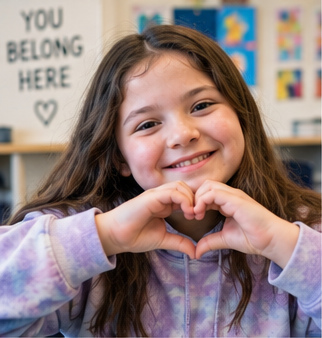
Elementary school is where students begin developing many of the skills that will shape everything that comes later.
Reading. Math. Communication. Friendships. Self-regulation. Independence. Problem-solving. Learning how to participate in a classroom. Learning how to ask for help. Learning what makes school feel successful.
At A-FITS, FITS Elementary™ brings academics, therapeutic support, Social-Emotional Learning, Sensory Integration, communication, life skills, recreation, and early independence together within one individualized school experience.
Elementary School Should Fit the Child
Children enter elementary school with very different abilities and needs.
One student may already be reading above grade level but struggle significantly with flexibility or social interaction. Another may communicate differently and need substantial support accessing academics. Another may have strong verbal skills but become overwhelmed by sensory demands. Another may need help developing independence, classroom routines, or foundational academic skills.
That is why FITS Elementary does not begin with the assumption that every student needs the same thing.
What can this child already do? What is getting in the way? What support helps? What should we teach next?
Then we begin building the program around those answers.
Strong Academic Foundations
FITS Elementary provides meaningful academic instruction while recognizing that students may access learning in different ways.
Students may work in areas such as Reading, Writing, Mathematics, Science, Social Studies, Communication, Technology, and other age-appropriate academic areas.
Instruction may include direct teaching, small-group instruction, one-to-one support, hands-on learning, multi-sensory activities, visual supports, technology-supported instruction, project-based activities, whole-group participation, independent tasking, repetition and practice, and modified materials when appropriate.
The goal is not simply exposure to curriculum. The goal is meaningful access to learning.
Different Academic Pathways
Students with autism do not all need the same type of academic program.
High Functioning Autism Programming supports academically capable students with autism who may be working at or above grade level but need a smaller, more structured, autism-specialized environment to successfully access learning.
Functional Academic Programming supports students who benefit from academics taught through practical, meaningful applications connected to communication, daily living, independence, and future participation.
Some students need a blend of both. A-FITS looks at the student subject by subject, skill by skill, and goal by goal rather than assuming one label determines the entire academic pathway.
Learning at the Student's Level
Elementary students do not always develop evenly across academic areas.
A student may be advanced in math and need additional support in reading. Another may understand the academic concept but have difficulty writing the answer. Another may need foundational instruction while still participating in age-appropriate classroom experiences.
A-FITS teachers look at what the individual student knows and what they are ready to learn next.
Students can be challenged where they are strong and supported where they need help.
Structured Teaching
For many elementary students with autism, understanding the environment can make learning significantly easier.
A-FITS uses Structured Teaching strategies to help make classrooms more predictable and understandable. That can include clearly organized learning spaces, individual schedules, visual schedules, First/Then supports, work systems, task sequences, picture or written directions, visual timers, checklists, and clearly defined expectations.
The purpose of structure is not to create rigidity. It is to reduce unnecessary confusion so students can put more of their energy into learning.
Structure becomes a tool for independence.
Communication Throughout the Day
Communication affects nearly everything an elementary student does.
It allows a child to ask for help, request a break, express discomfort, participate in lessons, make choices, interact with classmates, share interests, tell someone what happened, express emotions, and advocate for themselves.
Through FITS Integrated Support™, communication development can be reinforced throughout the school day—not only during a Speech session.
The goal is communication that becomes increasingly useful in real life.
Sensory Integration
For some students, sensory needs can have a major effect on learning and participation.
A classroom may feel too loud. A student may need movement. Another may seek pressure or heavy work. Another may become overwhelmed by crowded spaces, unexpected sounds, or changes in the environment.
Sensory Integration is built into the A-FITS model. Depending on individual needs, elementary students may have access to sensory spaces, movement opportunities, sensory equipment, heavy-work activities, alternative seating, sensory tools, quiet spaces, environmental modifications, and individualized sensory strategies.
We want students to gradually develop the ability to recognize what they need, access appropriate support, and return to participation.
Social-Emotional Learning Starts Early
Young students are learning much more than academics.
They are also learning: What am I feeling? Why am I upset? What can I do when something doesn't go my way? How do I ask for help? How do I solve a problem with another person?
Social-Emotional Learning is integrated throughout FITS Elementary.
Students may work on identifying emotions, recognizing frustration, learning coping strategies, developing flexibility, waiting, handling disappointment, making choices, problem-solving, understanding others, managing conflict, building confidence, and asking for support.
Real moments become opportunities to teach real skills.
Learning How to Be With Other People
Social development begins with opportunities.
Students need chances to practice playing near others, playing with others, sharing, taking turns, joining an activity, starting a conversation, responding to another student, asking questions, sharing interests, respecting boundaries, working in a group, and building friendships.
The goal is not simply learning what friendship looks like on a worksheet. It is creating opportunities for friendship to actually happen.
School Based ABA
Behavior is often communication.
A student may be communicating: This is too difficult. I don't understand. I need a break. This environment is overwhelming. I don't know how to ask for what I need.
School Based ABA helps the A-FITS team understand behavior, identify missing skills, modify environmental barriers, reinforce successful responses, and teach more effective ways for students to communicate and participate.
Understand the need. Teach the skill. Build greater independence.
Building Independence From the Beginning
Transition does not begin in high school.
Elementary students are already developing the skills that will eventually support adult independence. That may begin with following a schedule, carrying belongings, cleaning up, making choices, asking for help, completing a classroom responsibility, organizing materials, following routines, participating in self-care, preparing a simple snack, and following multi-step directions.
We do not wait until students are teenagers to begin.
Executive Functioning
Elementary school also provides an opportunity to begin developing the skills students use to organize themselves.
Students may need support learning how to start a task, finish a task, follow a sequence, check a schedule, gather materials, put materials away, wait, transition, manage time, shift from one activity to another, complete more than one step, and ask what to do next.
At first, these skills may require significant adult support. Over time, the goal is to gradually reduce that support where possible.
Learning Through Play
Play is an important part of childhood.
It can also support communication, creativity, problem-solving, motor development, flexibility, turn-taking, cooperation, social interaction, imagination, and friendship.
FITS Elementary gives students opportunities to move, play, explore, and enjoy being children.
Students deserve time to be students.
Specials, Activities & School Experiences
Through FITS Experience™, students may participate in age-appropriate experiences such as art, music, movement, physical activities, STEM activities, technology, school celebrations, special events, clubs, creative projects, and recreation.
Specific offerings may vary by campus and school year.
We want children to have opportunities to try something new, discover something they enjoy, participate with others, and create positive memories of school.
The Individualized Learning Plan
Every A-FITS student receives an Individualized Learning Plan (ILP).
For elementary students, the ILP helps identify important academic, communication, social, behavioral, functional, and independence priorities.
Previous educational records may help us understand the student's history, but the plan also reflects what our team learns after spending time with the child.
Through our 30-Day Commitment to Understanding Your Child, we observe, assess, collaborate, establish baselines, and begin identifying the supports and goals that should guide the student's program.
We want to understand the child who is sitting in front of us today.
Confidence Matters
Young students are beginning to form beliefs about themselves.
Am I good at school? Do adults understand me? Can I make friends? What happens when I make a mistake? Do I belong here?
A child who repeatedly experiences failure may eventually stop wanting to try. That is why appropriately supported success matters.
We want students to experience: “I learned that.” “I figured it out.” “I asked for help.” “I made a friend.” “I tried something new.” “I can do this.”
The School Needs to FIT Your Child.
Come experience A-FITS and talk with our team about your child's strengths, learning profile, support needs, and goals.
Schedule a Tour