
FITS High School™
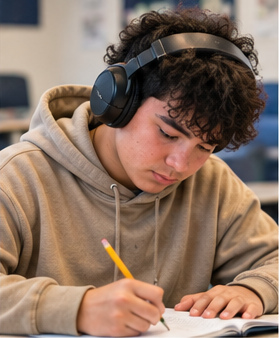
High school is where everything begins coming together.
Academics. Communication. Relationships. Responsibility. Self-advocacy. Life skills. Work habits. Community participation. Independence. And increasingly important questions about what happens after graduation.
At A-FITS, FITS High School™ is designed to give students with autism a meaningful high-school experience while intentionally preparing them for adulthood.
Students are still students. They should have friends, electives, clubs, school events, academic accomplishments, challenges, memories, and opportunities to discover who they are.
High School Should Prepare Students for More Than Graduation
Graduation is important. But a diploma or final day of school does not answer questions such as:
Can the student communicate what they need? Can they manage responsibilities? Can they make meaningful choices? Can they navigate a workplace? Can they participate in the community? Can they care for themselves with greater independence? Can they recognize when they need support? Can they advocate for that support?
Those questions matter.
FITS High School keeps them in view while students continue receiving a meaningful education.
An Individualized High-School Pathway
There is no single A-FITS high-school student.
One student may be academically capable of pursuing traditional high-school coursework while needing significant support with executive functioning, communication, sensory needs, or social development.
Another student may benefit from a combination of academic coursework and functional academics.
Another may require a program emphasizing communication, independent living, life skills, vocational development, and community participation.
Many students fall somewhere between those pathways.
We do not begin by asking: “What program do we put this student into?”
We ask: “What does this student need their high-school experience to accomplish?”
Multiple Academic Pathways
Students with autism do not all have the same academic needs.
Some students need significant modifications and a more functional academic program.
Others are working at grade level—or above grade level—and need a specialized school environment because of challenges involving executive functioning, social communication, sensory needs, emotional regulation, flexibility, anxiety, behavior, or navigating a traditional school setting.
A-FITS is designed to serve both.
A specialized autism school does not have to mean a modified academic program.
High Functioning Autism Programming
Some students with autism are academically capable of completing traditional, grade-level, or advanced coursework but still require a school environment designed around the way they learn.
These students may have strong academic abilities while experiencing difficulty with executive functioning, organization, time management, assignment completion, written expression, social communication, peer relationships, emotional regulation, sensory processing, flexibility, anxiety, self-advocacy, large classroom environments, transitions, or managing multiple teachers and expectations.
A student can be highly capable academically and still need significant educational support.
At A-FITS, High Functioning Autism Programming allows academically capable students to continue progressing through meaningful high-school coursework while receiving the individualized supports that help them successfully access it.
Depending on the student, programming may include grade-level academic instruction, high-school credit coursework, college-preparatory academics when appropriate, individualized pacing, small-group instruction, Structured Teaching, executive-functioning support, organizational systems, visual and written supports, technology-supported learning, alternative ways to demonstrate knowledge when appropriate, Social-Emotional Learning, social communication support, Sensory Integration, School Based ABA, self-advocacy development, and transition and postsecondary planning.
If the student is capable of the academics, we want to help remove the barriers that are preventing them from accessing those academics successfully.
For some students, the future may include college, community college, university, technical education, career certification, competitive employment, entrepreneurship, or other postsecondary opportunities.
Their autism-related support needs remain important, but those needs should not automatically determine the ceiling of their academic program.
Functional Academic Programming
Other students may benefit from a Functional Academic Program that places greater emphasis on applying academic skills to everyday life and future independence.
Functional academics are not simply easier academics.
They are academics taught with a deliberate focus on: “How will this student use this skill in their life?”
Depending on the student's needs, functional academics may include functional reading, functional writing, money skills, shopping, budgeting, time, calendars, schedules, measurement, cooking, reading signs, following written directions, understanding workplace information, completing forms, community navigation, personal information, and practical technology use.
For example, mathematics might include calculating the cost of a purchase, understanding a paycheck, measuring ingredients, or managing a basic budget.
Reading instruction might include understanding a schedule, menu, job posting, workplace directions, safety information, or community signs.
Writing might include completing a form, creating a shopping list, sending an appropriate message, or communicating important personal information.
The academic skill still matters. The application becomes increasingly connected to independence.
Some Students Need Both
These pathways are not always completely separate.
A student may participate in traditional grade-level science while receiving functional instruction in mathematics. Another may complete traditional academics across most subjects while also receiving intensive executive-functioning, social, and life-skills support. Another student may primarily participate in functional academics but demonstrate an area of academic strength that should be developed further.
That is why A-FITS does not simply assign a student to a permanent academic category.
We look at the student subject by subject, skill by skill, and goal by goal.
The question is not: “Is this a high-functioning student or a functional-academic student?”
The better questions are: What can this student do? What should they be learning? What supports do they need to access it? And what academic pathway best prepares them for their future?
Different Academic Pathways. The Same Expectation for Growth.
A-FITS can serve students whose academic programming looks very different.
One student may be preparing for college. Another may be developing the reading, mathematics, communication, and independence skills necessary for supported adult living. Another may fall somewhere between those two pathways.
All three students deserve an education that takes their abilities seriously.
We do not assume that autism determines academic potential. We determine the program by understanding the student.
FITS Forward™
FITS High School is where FITS Forward™ becomes increasingly central.
High School. Life Skills. Independence. What's Next.
FITS Forward helps connect the student's current education with adulthood through transition planning, life skills, independent-living skills, self-advocacy, executive functioning, vocational exploration, pre-employment skills, career awareness, community-based instruction, work-related behavior, social development, adult-services awareness, recreation, and quality-of-life planning.
FITS High School is the school experience. FITS Forward is the bridge from that experience into adulthood.
Greater Responsibility
As students grow older, expectations should grow with them.
That does not mean removing support before the student is ready. It means looking for appropriate opportunities to increase responsibility.
Students may be expected to manage personal belongings, check schedules, gather materials, complete assignments, follow multi-step directions, meet deadlines, ask for clarification, communicate when they need help, complete classroom responsibilities, participate in personal care, make choices, solve problems, and manage increasingly complex routines.
Support should create independence—not permanent dependence on support.
Executive Functioning for Adult Life
High school dramatically increases the importance of executive functioning.
Students may need support learning to plan, organize, prioritize, begin tasks, complete tasks, manage time, follow schedules, track responsibilities, remember materials, shift between activities, manage multiple steps, solve unexpected problems, and monitor their own work.
These are school skills, but they are also employment skills, college skills, independent-living skills, community skills, and adult-life skills.
Structured Teaching for Older Students
Structured Teaching does not disappear in high school. It evolves.
Older students may increasingly use age-appropriate tools such as written schedules, planners, digital calendars, checklists, task lists, visual timelines, workplace-style work systems, multi-step instructions, organizational systems, reminders, and technology.
Make expectations clear enough that the student can become less dependent on another person explaining what to do.
Self-Awareness & Self-Advocacy
One of the most important things a student can develop during high school is a clearer understanding of themselves.
Students may begin identifying what they are good at, what is difficult, what environments help them succeed, what sensory situations are difficult, what helps them regulate, how they learn best, what support they need, what they can do independently, and what they want to become more independent with.
Whenever possible, students should increasingly learn to communicate: “I need help.” “I don't understand.” “I need more time.” “This environment is overwhelming.” “I need a break.” “This strategy helps me.” “I can do this myself.” “This is what I want.”
A stronger voice can create greater control over one's own life.
Social-Emotional Learning in High School
High-school students face increasingly complicated emotional and social situations.
They may be navigating stress, anxiety, frustration, changing relationships, conflict, identity, peer pressure, rejection, personal boundaries, increasing independence, expectations from adults, and decisions about the future.
Social-Emotional Learning (SEL) remains integrated throughout the school experience.
A high-school student should not only know what coping strategy exists. They should increasingly know: “Which strategy works for me, and when should I use it?”
Age-Appropriate Social Development
Social development does not stop because students become teenagers. It becomes more complex.
Students may need support understanding friendship, conversation, group dynamics, humor, personal boundaries, consent, privacy, dating and relationships, appropriate communication, social media, peer pressure, conflict, and workplace interactions.
Support should match the student's needs while respecting their age and dignity.
Friendships & Relationships Matter
Adult quality of life is influenced by more than employment. Relationships matter too.
Students need opportunities to spend time with peers, share interests, join activities, participate in clubs, attend social events, work collaboratively, build friendships, navigate disagreements, and develop appropriate boundaries.
A-FITS creates opportunities for students to learn about relationships through actual relationships, not only lessons about them.
Sensory Integration & Self-Management
Sensory needs do not disappear in high school, but students should increasingly become participants in understanding those needs.
A student may begin recognizing: “I need movement.” “That environment is too loud.” “I need a quieter place.” “Heavy work helps me regulate.” “I need my sensory tool.”
The stronger long-term outcome is increasingly: the student recognizes the need and knows what to do about it.
Communication for Adult Environments
Communication expectations change as students get older.
A student may need to communicate with teachers, employers, supervisors, coworkers, store employees, community members, healthcare providers, service providers, and unfamiliar adults.
Through FITS Integrated Support™, communication skills can be practiced in the environments where students will actually need them.
School Based ABA
School Based ABA continues to support students throughout high school.
As students become older, the focus increasingly connects with adult independence through functional communication, self-management, coping, flexibility, problem-solving, completing responsibilities, reducing prompt dependence, work-related behavior, community participation, social interaction, replacement skills, and increased independence.
Understand what the behavior is communicating, then teach a more effective skill.
Life Skills
Life skills become increasingly important as graduation approaches.
Depending on individual needs, students may work on cooking, meal preparation, laundry, cleaning, personal hygiene, grooming, organization, household routines, shopping, money use, following schedules, time management, personal responsibility, caring for belongings, safety, and asking for assistance.
The question is: “Which skills would give this student greater independence in adult life?”
Community-Based Instruction
Some things cannot be fully taught inside a classroom.
Students may need opportunities to practice skills in stores, restaurants, community businesses, recreational settings, volunteer locations, work environments, community events, and other public spaces.
Community-based instruction gives us an opportunity to ask: “Can the student use the skill where it actually matters?”
Vocational Exploration & Workplace Readiness
Many teenagers know very little about the range of jobs available to them. Students need exposure before they can develop preferences.
Vocational exploration may introduce students to different careers, workplace environments, job responsibilities, community businesses, technology-related work, retail, food service, office environments, maintenance, creative fields, hospitality, community service, and other areas connected to student interests.
Students may also work on punctuality, attendance, responsibility, following directions, staying engaged, completing tasks, working independently, maintaining appropriate pace, asking questions, accepting feedback, communicating with supervisors, and following workplace expectations.
Work Experiences
When appropriate, students may participate in increasingly authentic vocational experiences.
Work experiences can help a student discover: “I enjoy working with technology.” “I prefer working with my hands.” “I need movement throughout the day.” “I don't want to work around large groups of people.”
All of that information helps us better understand what type of adult environment may be a good fit.
College & Postsecondary Readiness
Some A-FITS students are preparing for college, community college, university, technical education, career certification, or other postsecondary programs.
For those students, readiness involves more than completing academic coursework. Students may also need support identifying strengths and interests, managing deadlines, organizing assignments, planning schedules, understanding accommodations, communicating with instructors, navigating unfamiliar systems, asking for help, advocating for themselves, and building the independence expected in an adult learning environment.
When appropriate, planning may also include exploring programs and career pathways, preparing for application steps, organizing enrollment requirements, considering class selection, and developing a personalized plan for academic success after high school.
Academic potential should be supported by the executive-functioning, self-advocacy, communication, and independence skills that help students access the opportunity.
High School Should Still Feel Like High School
Preparing for adulthood does not mean turning school into job training.
Students are still teenagers. They should still have opportunities for friends, clubs, electives, art, recreation, school dances, Prom, performances, special events, celebrations, school traditions, field experiences, student leadership, and fun.
Preparing for adulthood and enjoying high school are not competing goals. Students deserve both.
Transition Planning Becomes Highly Individualized
By high school, transition planning should become increasingly specific.
The student, family, and A-FITS team may begin considering strengths, interests, developing independence, remaining support needs, employment possibilities, adult living arrangements, community skills, adult services, and what the student wants their future to look like.
Those questions help determine what should become priorities during the remaining school years.
Preparing for Adult Services
The transition from school to adulthood changes many systems around the student.
Families may eventually need to explore Vocational Rehabilitation, developmental disability services, supported employment, postsecondary education, vocational training, adult day programs, community programs, transportation, supported living, independent living, benefits, financial planning, guardianship or alternatives to guardianship, and other adult resources.
The earlier families can begin planning, the more time everyone has to prepare.
The Student's Voice Should Grow
As students move closer to adulthood, their voice should become increasingly important.
Families remain essential. Professionals remain important. But whenever possible, the student should increasingly participate in decisions about goals, supports, interests, classes, activities, work, independence, community experiences, and future plans.
Instead of always asking “What do we think is best for the student?” we should increasingly also ask: “What does the student think?”
Different Futures. Equal Value.
Not every A-FITS high-school student will leave school headed toward the same destination.
One may pursue college. Another may attend vocational training. Another may enter competitive employment. Another may participate in supported employment. Another may continue developing daily-living and community skills with substantial adult support.
One future is not automatically more valuable than another.
Success should be measured against the student and the growth they have made.
The Individualized Learning Plan
The student's Individualized Learning Plan (ILP) continues to guide educational priorities throughout high school.
The ILP can reflect academic needs, communication, Social-Emotional Learning, executive functioning, behavior, sensory needs, life skills, independence, self-advocacy, transition priorities, vocational development, and other individualized goals.
As adulthood approaches, the question becomes increasingly: “How does what we are teaching today prepare this student for tomorrow?”
That is FITS High School™ — powered by FITS Forward™.
The School Needs to FIT Your Child.
Come experience A-FITS and talk with our team about your child's strengths, learning profile, support needs, and goals.
Schedule a Tour