
FITS Middle™
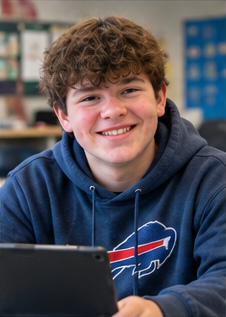
Middle school is a transition.
Students are no longer little kids, but they are not yet high-school students preparing to leave school. It is a period when expectations begin to change.
Academics become more complex. Social relationships become more complicated. Students are expected to manage more responsibility. Bodies are changing. Interests become stronger. Independence begins to matter more.
At A-FITS, FITS Middle™ is designed to support students with autism through this important stage while continuing to individualize academics, communication, Social-Emotional Learning, Sensory Integration, behavior support, life skills, social development, executive functioning, and growing independence.
A Different Stage Requires a Different Approach
A middle-school student should not simply receive an older version of an elementary program.
Their needs are changing. Students may be expected to complete more complex academic work, manage multiple assignments, follow longer schedules, move between activities more independently, organize materials, navigate increasingly complicated friendships, handle more unstructured social situations, manage changing emotions, take greater responsibility for personal care, make more decisions, and begin thinking about the future.
For some students, those expectations develop naturally. Others need them explicitly taught.
FITS Middle recognizes that independence is itself something that can be taught.
Academics That Continue to Grow
Academic expectations continue to increase during middle school.
Students may work in English / Language Arts, Reading, Writing, Mathematics, Science, Social Studies, Technology, and Functional Academics when appropriate.
Students may be working at different instructional levels across different subjects.
A-FITS continues to ask: What does this student know? What are they ready to learn next? What support gives them meaningful access to the instruction?
Different Academic Pathways
FITS Middle serves students whose academic needs may look very different.
High Functioning Autism Programming supports academically capable students with autism who may be working at or above grade level but need help with executive functioning, organization, social communication, Sensory Integration, emotional regulation, flexibility, or navigating a traditional school environment.
Functional Academic Programming supports students who benefit from reading, writing, mathematics, communication, and other academic skills taught through practical applications connected to everyday life and growing independence.
Many students need a combination of both. The academic pathway can vary by subject and can change as the student develops.
Increasing Academic Independence
As students get older, we want them to gradually take greater ownership of their learning.
That may include learning how to check an assignment, gather materials, follow written directions, begin work without repeated prompting, complete multiple steps, ask for clarification, monitor progress, check completed work, use a planner or schedule, manage deadlines, organize assignments, and complete more work independently.
Help when it is needed. Fade it when it is no longer needed.
Structured Teaching Evolves With the Student
Structured Teaching continues to be important during the middle-school years, but the supports should mature with the student.
A middle-school student may begin using written schedules, checklists, assignment lists, visual timelines, digital calendars, task-management systems, multi-step work systems, and organizational routines.
Make expectations understandable so the student can become more independent.
Executive Functioning Becomes Increasingly Important
Middle school places greater demands on executive functioning.
Students may need explicit support with planning, organization, starting tasks, finishing tasks, managing time, prioritizing, following schedules, remembering materials, shifting between activities, completing multi-step assignments, flexible thinking, problem-solving, and monitoring their own work.
These skills affect academics, but they also affect daily life.
Social-Emotional Learning During Adolescence
Middle school can be an emotionally complicated time for any student.
For students with autism, adolescence may create additional challenges involving emotional awareness, frustration, anxiety, flexibility, social expectations, changing friendships, self-image, conflict, personal boundaries, and increasing independence.
Social-Emotional Learning becomes especially important during these years.
The goal is not simply to teach students to behave appropriately. It is to help them increasingly understand themselves.
Identity & Self-Awareness
Middle school is often when students begin thinking more deeply about who they are.
They may notice differences between themselves and their peers. They may become more aware of their diagnosis. They may begin recognizing their own strengths and challenges.
A-FITS wants students to develop a healthy understanding of themselves, including what they are good at, what interests them, what situations are difficult, what sensory environments affect them, what helps them regulate, how they communicate best, what kinds of support are useful, and what they can increasingly do independently.
Self-awareness becomes the foundation for something even more important: self-advocacy.
Building Self-Advocacy
Students should increasingly learn how to communicate what they need.
A middle-school student may begin learning how to say: “I don't understand.” “Can you explain that another way?” “I need a break.” “The room is too loud.” “I need more time.” “I can do this part myself.” “I need help with this part.”
The underlying skill is the same: participating in decisions about your own needs.
Social Relationships Become More Complex
Middle-school friendships are different from elementary-school friendships.
Students may need support navigating friendship groups, personal boundaries, teasing, conflict, exclusion, peer pressure, shared interests, changing friendships, different perspectives, and appropriate digital communication.
Students may need explicit instruction in some of these areas, but social development should also happen naturally through group projects, lunch, clubs, games, electives, recreation, school events, and shared-interest activities.
Real relationships require real opportunities to connect.
Personal Boundaries & Relationships
As students mature, understanding personal boundaries becomes increasingly important.
Students may need support learning about personal space, privacy, appropriate touch, consent, public versus private behavior, respecting another person's boundaries, communicating one's own boundaries, friendship expectations, and appropriate social communication.
These are not simply school rules. They are life skills that support safety, relationships, and greater independence.
Communication Continues to Matter
A student may be academically capable and still struggle to communicate effectively in social or stressful situations.
Communication skills during middle school may include asking questions, requesting clarification, explaining a problem, expressing frustration, advocating for support, participating in group discussions, maintaining conversations, understanding conversational turn-taking, communicating with unfamiliar adults, and repairing misunderstandings.
Sensory Integration During a Changing Stage
Sensory needs do not disappear as students get older, but the way we address them should become increasingly age-appropriate and self-directed.
A middle-school student may begin learning: What environments are difficult for me? What sensory input helps me? When should I take a break? What tool can I use? How can I ask for what I need?
The shift begins from adults managing the student's sensory needs toward the student increasingly understanding and managing their own.
School Based ABA
School Based ABA remains available throughout the middle-school experience.
Behavioral support may focus on functional communication, coping skills, increasing independence, reducing reliance on prompts, developing replacement behaviors, following routines, completing responsibilities, managing transitions, social problem-solving, increasing flexibility, and building new skills.
The question remains: What is the behavior communicating, and what skill could better meet that need?
Daily Living & Personal Independence
Middle school is an important time to increase expectations for personal responsibility.
Depending on the student, FITS Middle may include work on personal hygiene, grooming, caring for belongings, organizing a backpack, cleaning up, preparing simple foods, following routines, completing chores, managing personal items, making purchases, using money, following a shopping list, preparing for activities, and asking for assistance appropriately.
Personal Care & Growing Up
Adolescence brings physical changes. Some students with autism may need more explicit instruction and support understanding those changes and the personal-care routines that accompany them.
Depending on individual need, students may require support with hygiene, deodorant, grooming, changing clothing, menstrual care, privacy, appropriate public and private behavior, managing personal belongings, and increasing responsibility for self-care.
These topics should be addressed respectfully and age-appropriately.
Making Choices & Taking Responsibility
Students need opportunities to make meaningful choices. Increasing choice also creates opportunities to learn responsibility.
Students can begin learning: Choices have outcomes. Responsibilities still need to be completed. I can make decisions and learn from them.
Interests Begin to Matter More
Middle-school students often develop strong interests.
Those interests can become powerful tools for engagement, friendships, electives, clubs, academic motivation, leisure, skill development, and early career exploration.
At this stage, interests begin becoming clues about what the student may enjoy later in life.
Clubs, Electives & Belonging
Middle school should still be fun.
Through FITS Experience™, students may participate in age-appropriate clubs, electives, art, technology, STEM, sports, recreation, school events, social activities, creative projects, and special celebrations.
These experiences create natural opportunities for friendship, confidence, teamwork, communication, choice-making, shared interests, leadership, and belonging.
Transition Starts Becoming More Visible
Transition planning begins well before high school.
During middle school, the connection between today's skills and future independence can become more explicit. Students may begin exploring personal strengths, interests, responsibilities, work habits, community skills, daily-living skills, independence goals, early career interests, self-advocacy, and what they may want to learn next.
Preparing for FITS Forward™
Middle school should create a strong bridge into high school.
Before students enter FITS High School™ and the FITS Forward™ transition framework, we want them to be developing greater academic independence, self-awareness, communication, self-advocacy, organization, executive functioning, daily-living skills, social understanding, responsibility, community awareness, and confidence.
FITS Middle builds the bridge. FITS High School and FITS Forward continue the journey.
The School Needs to FIT Your Child.
Come experience A-FITS and talk with our team about your child's strengths, learning profile, support needs, and goals.
Schedule a Tour